
The story · chapter one
How Mama's ube reached the Netherlands
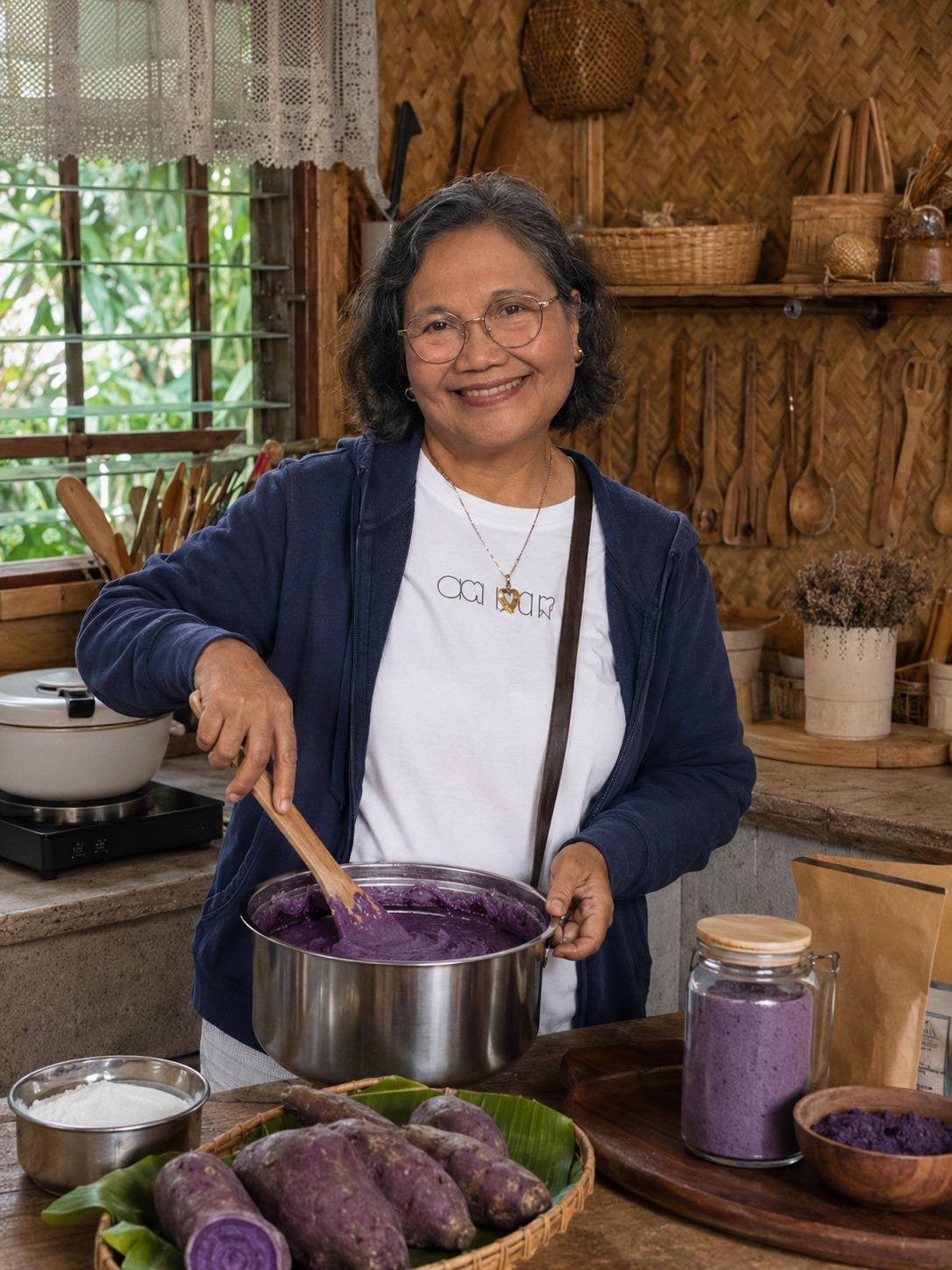
My mother, Salve, comes from Pampanga — the culinary capital of the Philippines. I remember how she prepared ube by hand for every birthday. It went into a big pot, and it took a lot of stirring — for hours. We children took turns at the spoon. That was part of the gift: not just the food, but making it together.
When I moved to the Netherlands, I missed that taste. And when we tried to buy ube, we discovered that hardly any authentic powder was available — only mass imports without a story.
So we decided to do it ourselves. Taste Filipino starts with a trusted Filipino partner who guarantees the quality and origin of his ube. Our ambition reaches further: over time, to source and process directly in Pampanga — the region where Mama is from and where her story began. A fair price for the farmer, the same taste and love of Mama's pot — now with the convenience of a powder.
— Czarina & Kenneth, co-founders
When you make it with love, people taste the difference.
Chapter two · the root
More than a trend —a Filipino treasure.
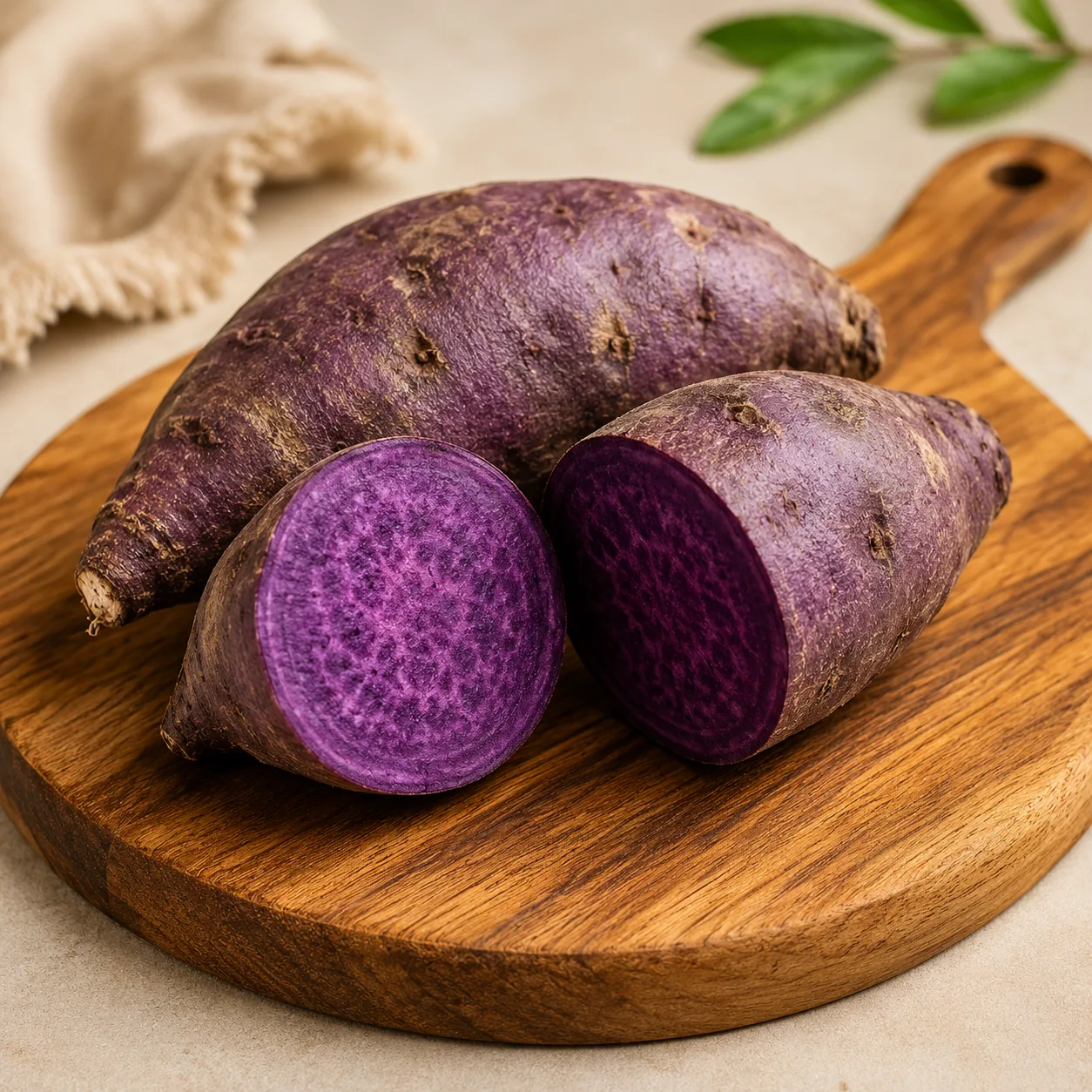
Ube (pronounced: oo-beh) is a purple yam — Dioscorea alata — that has been the foundation of Filipino desserts for generations. Worth knowing: many "ube" products on the market are actually dyed purple sweet potato or taro. Our ube is real Dioscorea alata, grown on Philippine farms, dried and milled into a silky powder — no dyes, no extracts.
Real ube
Dioscorea alata from the Philippines. Not dyed sweet potato or taro.
Nutritious
Rich in antioxidants, fibre and vitamin C.
Versatile
Lattes, cakes, ice cream, bread, mochi, pancakes — anywhere.
Short chain
Straight from the farm cooperative. Traceable to the field.
Real versus fake
Why this matters
Real Filipino ube
- Dioscorea alata — the actual purple yam
- Grown on Philippine farms, traceable to the field
- Natural vanilla sweetness and violet colour, no dyes
Dyed purple sweet potato
- A different root — usually sweet potato or taro, not a yam
- Mostly from China, rarely with a clear origin
- Bland flavour, coloured up and propped with aromas
Mama will soon bake for home too.
We're also launching for consumers in Q4 2026. Join the waitlist and help us decide what to offer — your voice shapes the first line-up.
*Indicative prices including VAT. Final pricing set at launch. Waitlist members get a 15% launch discount + chance of a free sample.
Live · waitlist
are already in line ahead of you for the first powder from the Philippines.
GOAL · 1,000 BEFORE LAUNCH
Recipes · from Mama's kitchen
What will you bake?
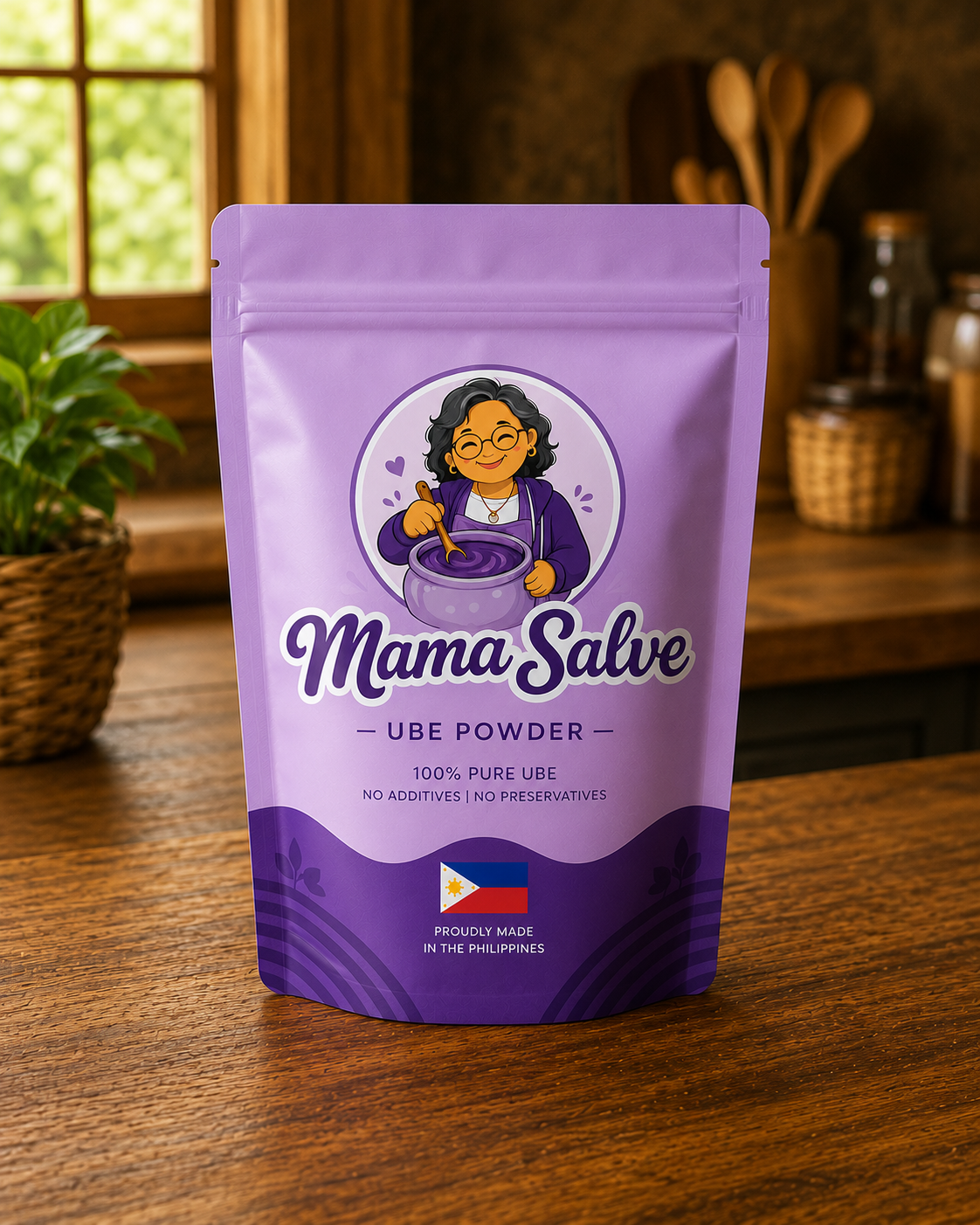
Latte, cake, mochi and more — with video and ingredients. For those who want to discover ube from the first bite.